
High above New York’s Central Park is an apartment with 23-foot-high ceilings and abundant north light. The apartment itself is as much a part of the owners’ collections as the art itself. Neighboring apartments have housed notable luminaries from politicians to world-renowned artists.
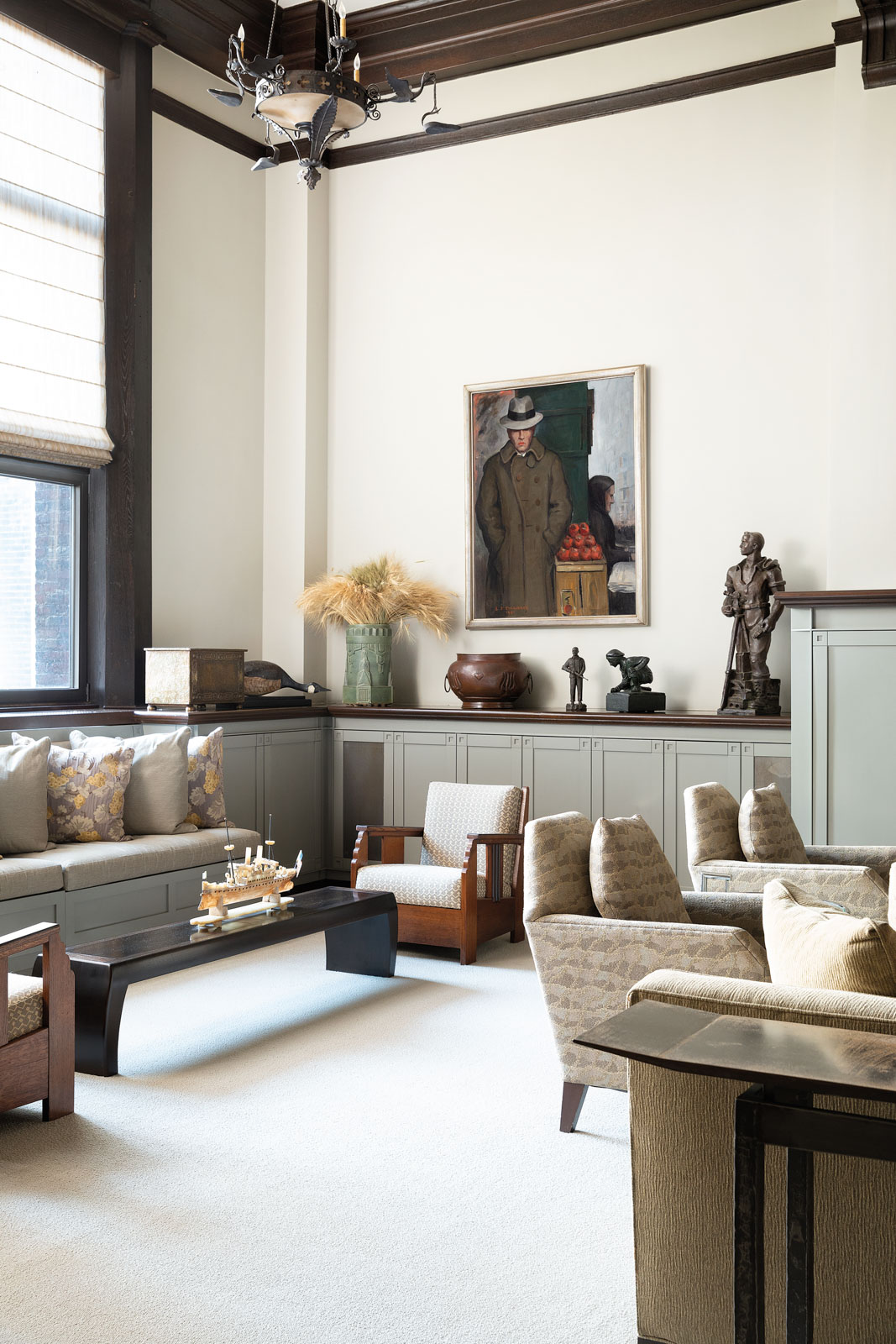 The couple’s first painting, Apple Seller, by E. Oscar Thalinger (1885-1965) hangs in the living room.
Prominent in the couple’s living room is a painting by E. Oscar Thalinger (1885-1965), the first painting they bought together. Thalinger’s portrait of an apple seller during the Great Depression is emblematic of the collection and the period of American art history that interests them the most. Thalinger and Thomas Hart Benton taught at the Summer School of Art, an offshoot of the Ste. Geneviève Art Colony, outside of St. Louis, Missouri.
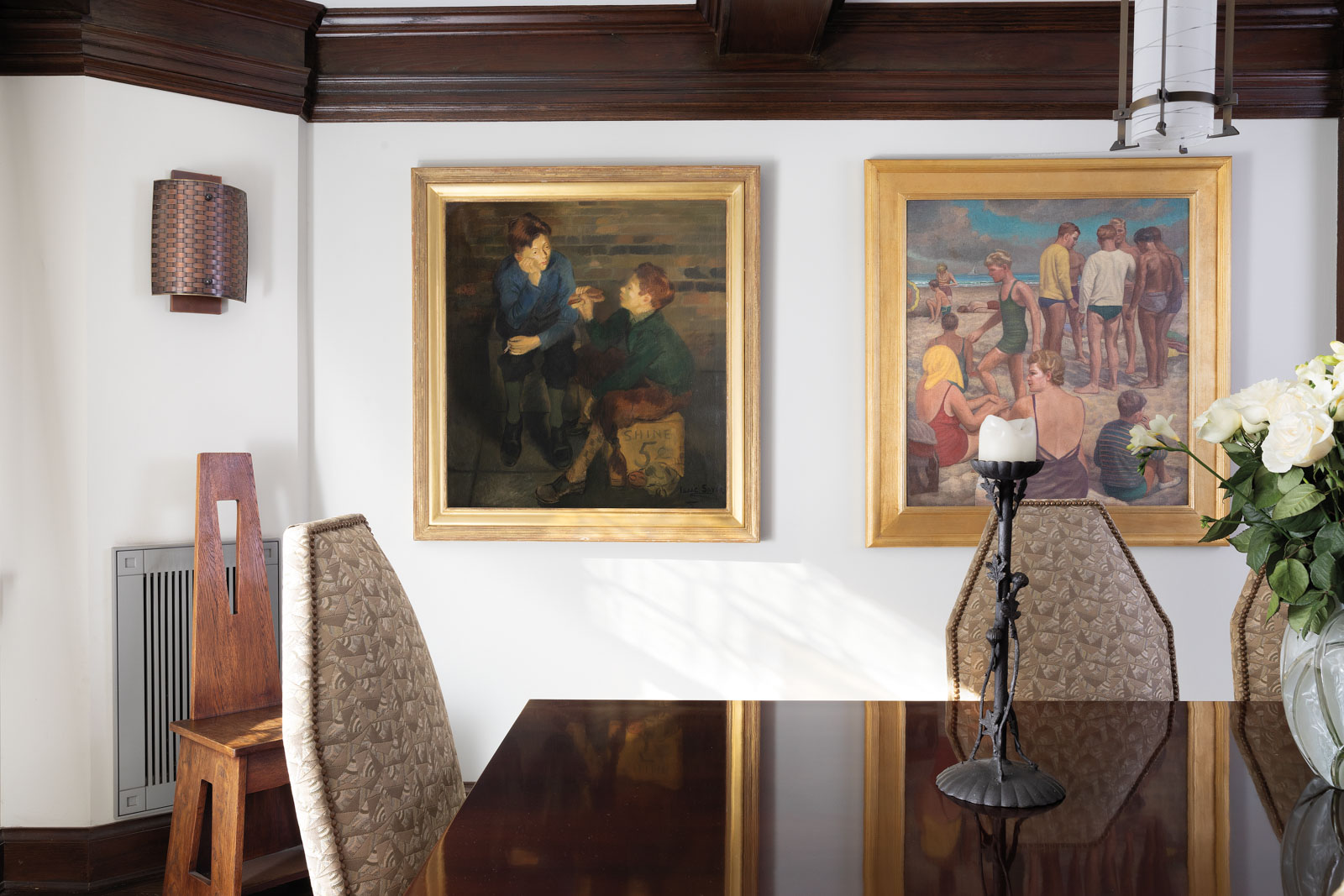 In the dining room are (left to right) A Nickel a Shine by Isaac Soyer (1902-1981) and Beach Scene by Donald Squire (1895-1947).
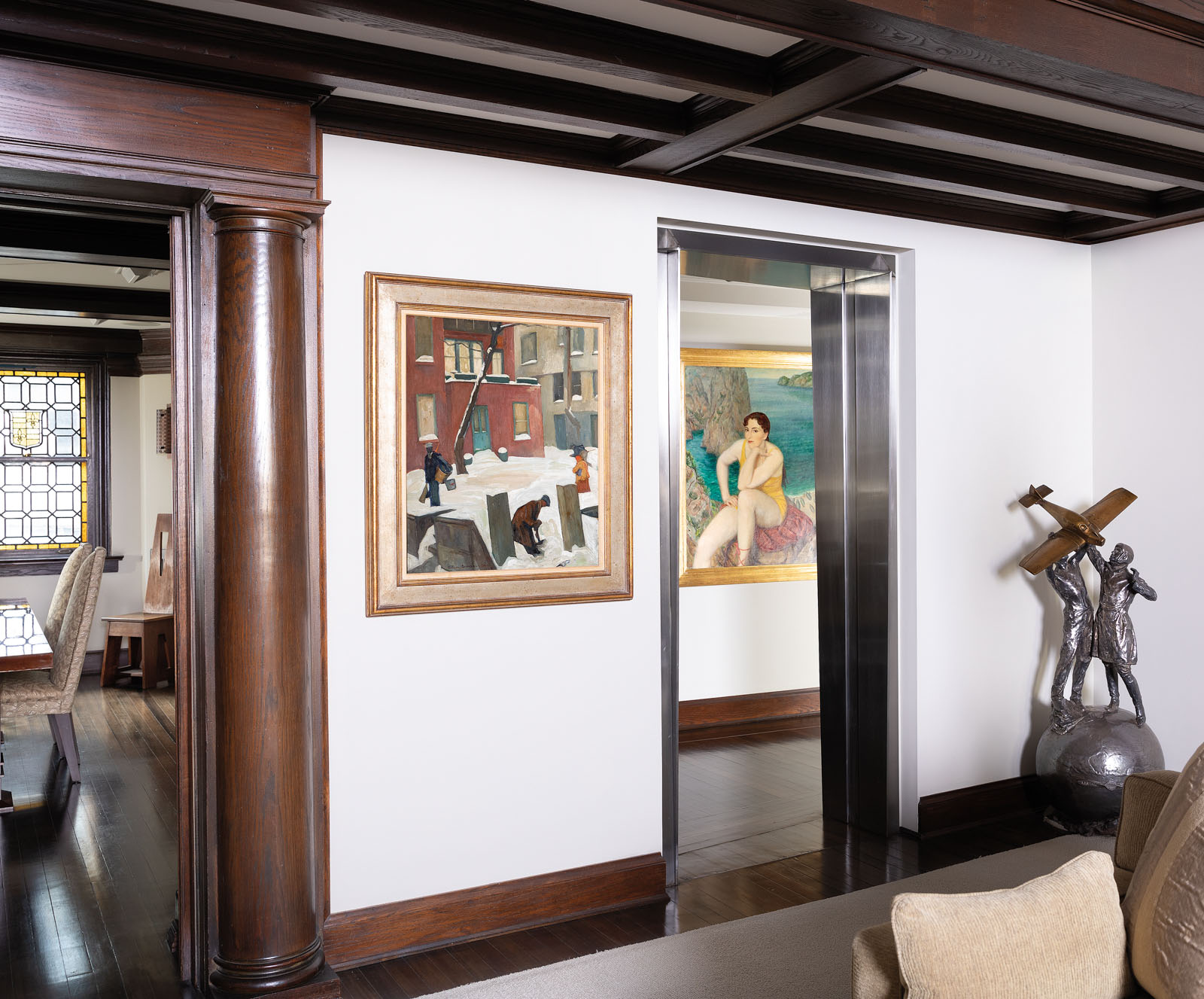 In the living room are (left to right) Greenwich Village After the Storm by William Auerbach-Levy (1889-1964); Amaylia at Capri by Paul Trebilcock (1902-1981) and The Larson Trophy by John Gutzon Borglum (1867-1941), the sculptor of Mount Rushmore.
When the economy collapsed in 1929, there was, ironically, a bumper crop of apples. Some of the surplus was bought and provided to unemployed men at a minimal cost. Selling apples for five cents apiece, gave them a sense of purpose. Thalinger’s figure is wearing the overcoat and fedora he had worn to his office when he was employed.
Another way to make money at the time was shining shoes, a task often left to young boys. Isaac Soyer’s A Nickel a Shine is in the couple’s collection. The WPA published an edition of lithographs of the painting in 1937.
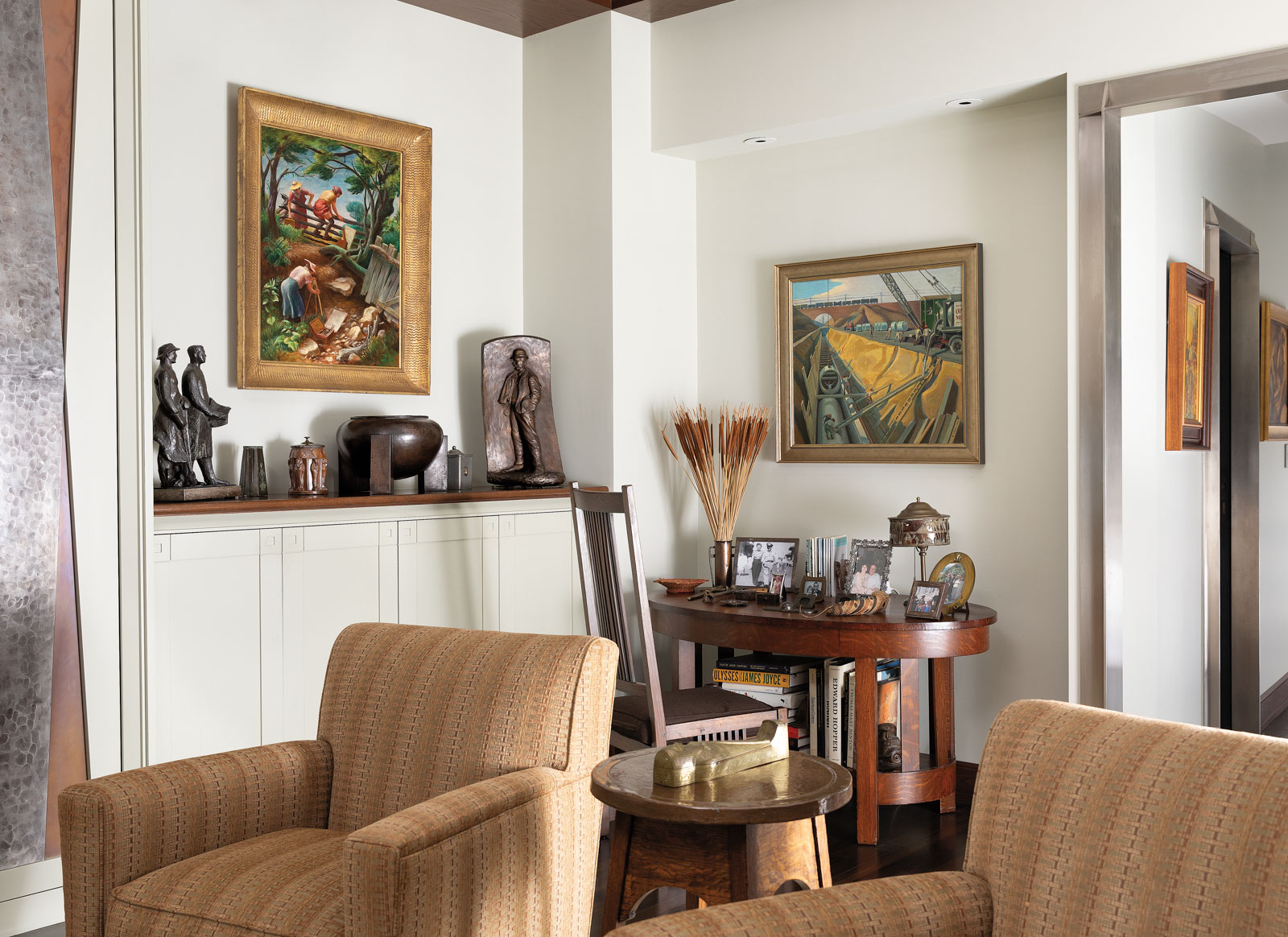 On the left is a painting of women painting in plein air by Frances Johnson Skinner (1902-1983). On the right is a painting of the building of a subway by Remie Lohse (1892-1947).
Each of the collectors brought their previous collections into their relationship and to the apartment where they have lived for 24 years. She collects signed and unsigned green pottery from the WPA period as well as Egyptian Revival artifacts from the 1920s. He collects hip flasks, including one that had been given to President Eisenhower.
Early on, they read an article on Works Progress Administration (WPA) art and loved the graphics. The article listed some galleries in New York which they called to make appointments. They asked the dealers to tell them more about the period and, he comments, “The more we saw, the more we liked it.” At the time, they were able to find some of the artists and interview them.
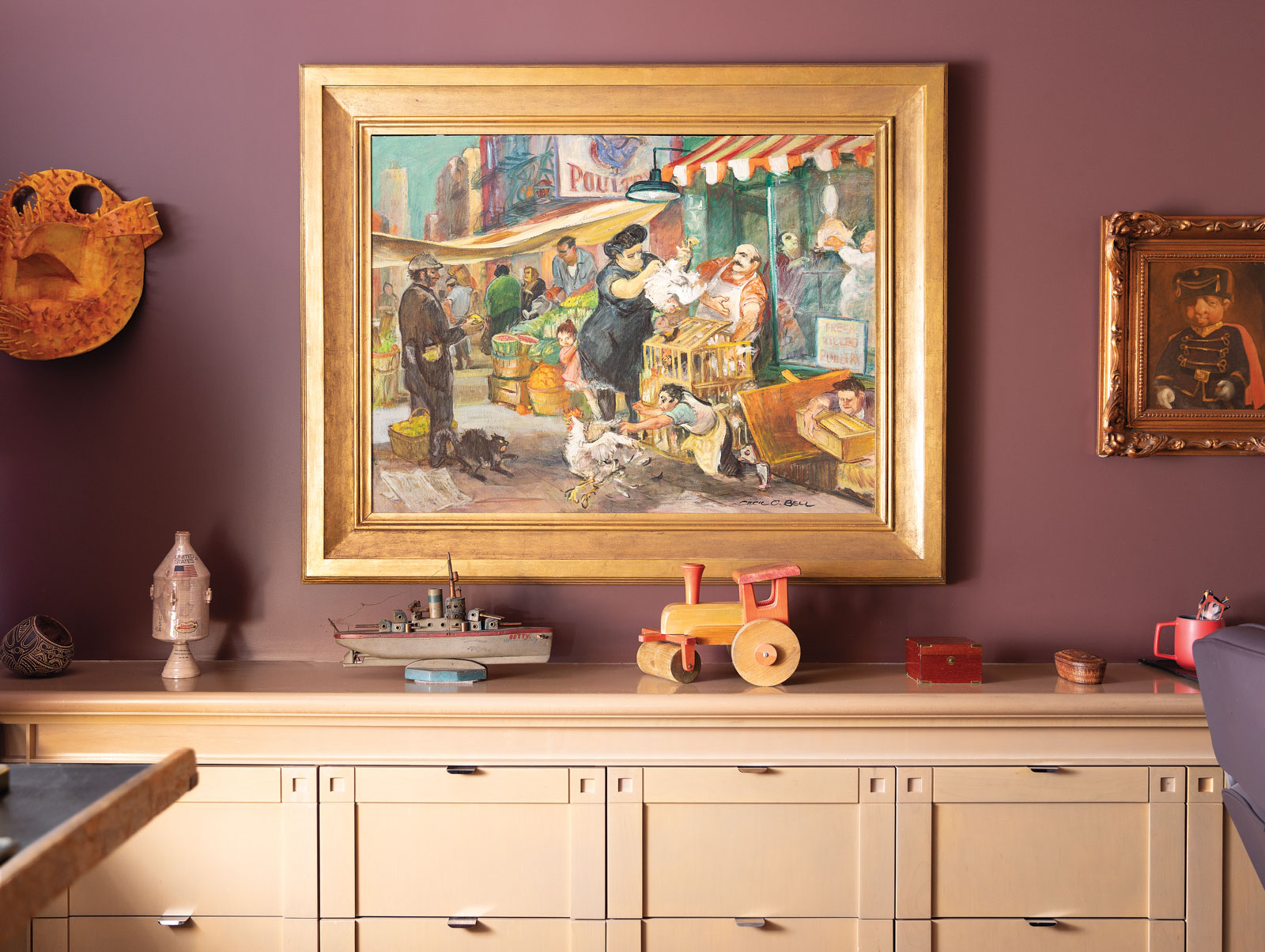 the cabinet is Essex Street Market by Cecil C. Bell (1906-1970). On the right is My Muse by Fred Buchholz (1901-1983).
“When we had tea with Max Arthur Cohn (1903-1998) he brought out paintings and we were like kids in a candy store,” he relates.
Speaking of the WPA, she comments, “It was the only time the government supported the arts. The artists painted a slice of life—everyday people doing everyday things.”
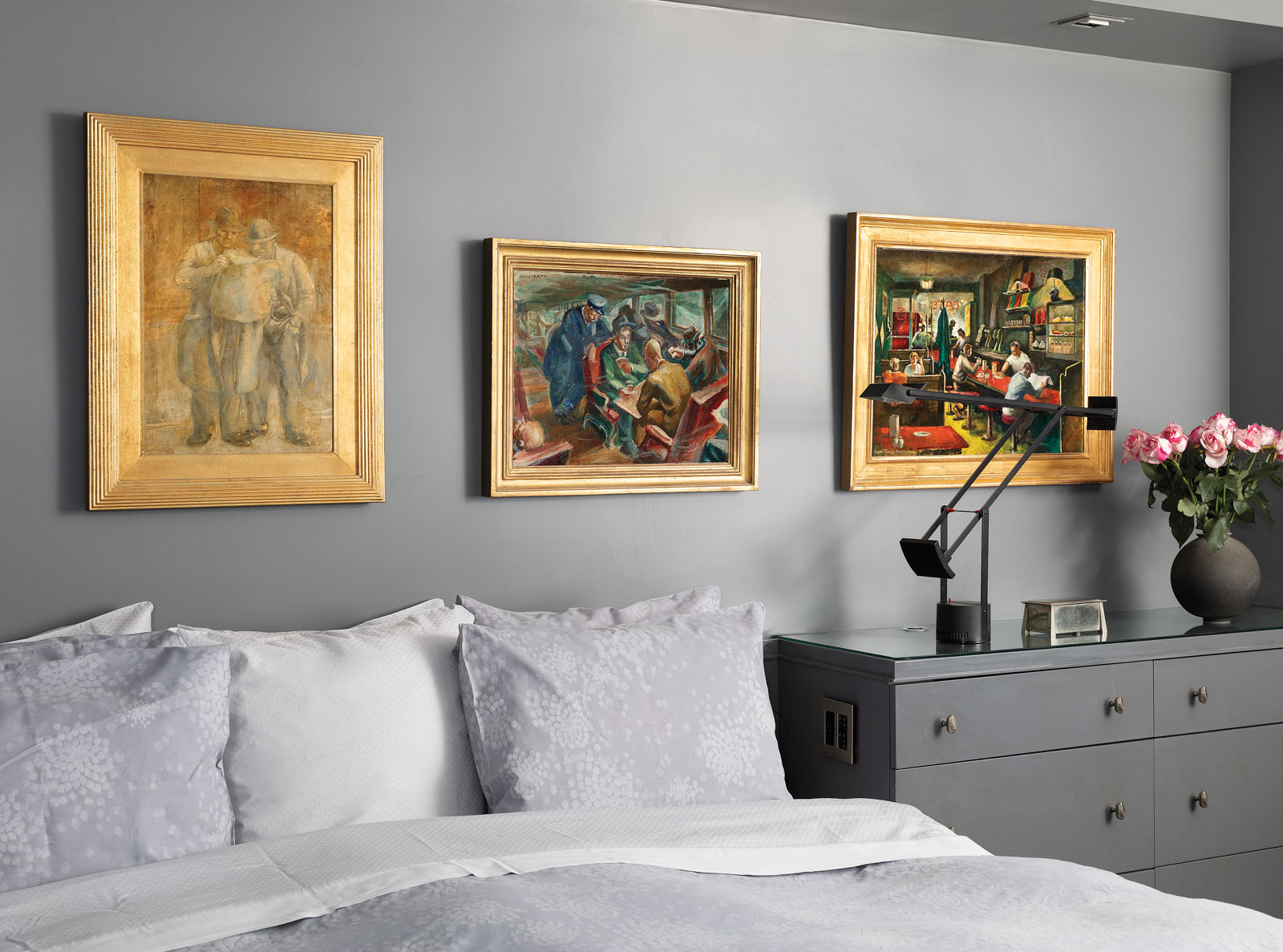 The paintings in the principle bedroom are (left to right) a painting of men reading a newspaper by Isabel Bishop (1902-1988), a painting of card players on a train by James Daugherty (1889-1974) and The Lunch Counter by Yvonne Twining Humber (1904-2004).
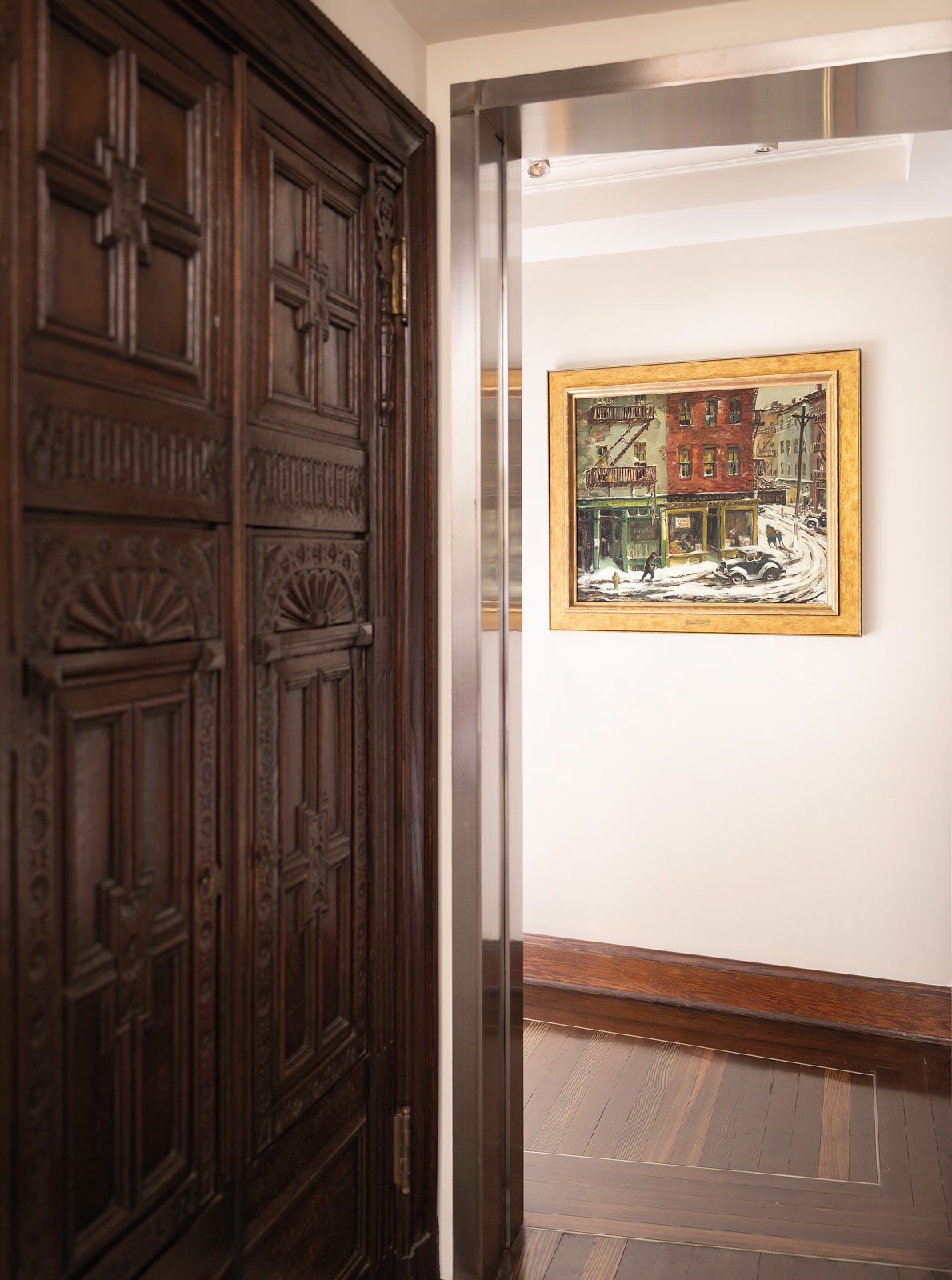 In the hall is Bleeker Street by Henry Martin Gasser (1909-1981).
The subjects of the paintings were often heroically confronting social and political upheaval and turmoil in a painting style that is now known as social realism.
He notes that much of the art until that time was of flowers and birds and other bucolic subjects. Commenting on their painting of card players on a train by James Daugherty, he adds, “We liked the honesty of the subject matter. Since I spent 15 years commuting by train to and from the city, I can vouch for that.” Both collectors are drawn to the subject matter of the work of art rather than the artist’s name.
Their paintings, sculpture, pottery and other artifacts are of a piece with the architecture of their apartment and their other furnishings. One surprising element is the polished steel frames of doorways to one area of the apartment. “We didn’t want the effect to be all of one period,” he explains. “The steel trim marks a transition into the 21st century.”
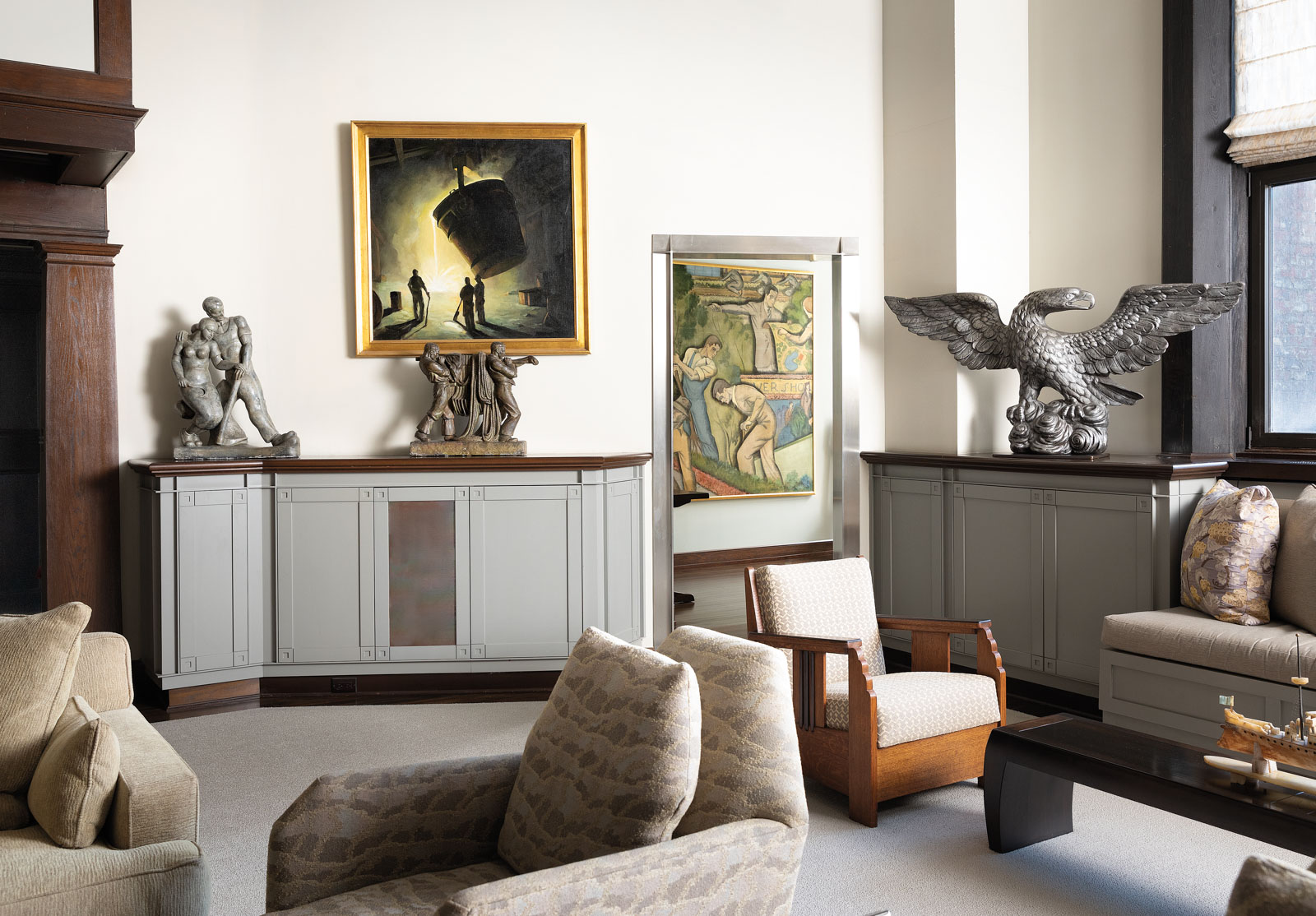 Above the cabinet is an unsigned painting of steel workers. Beneath it is the maquette for Labour by the British artist, Muriel Joyce Bidder (1906-1999), the only piece in the collection by an artist who isn’t American. Through the doorway is one of the mural panels painted for the Golden Gate International Exhibition in 1939.
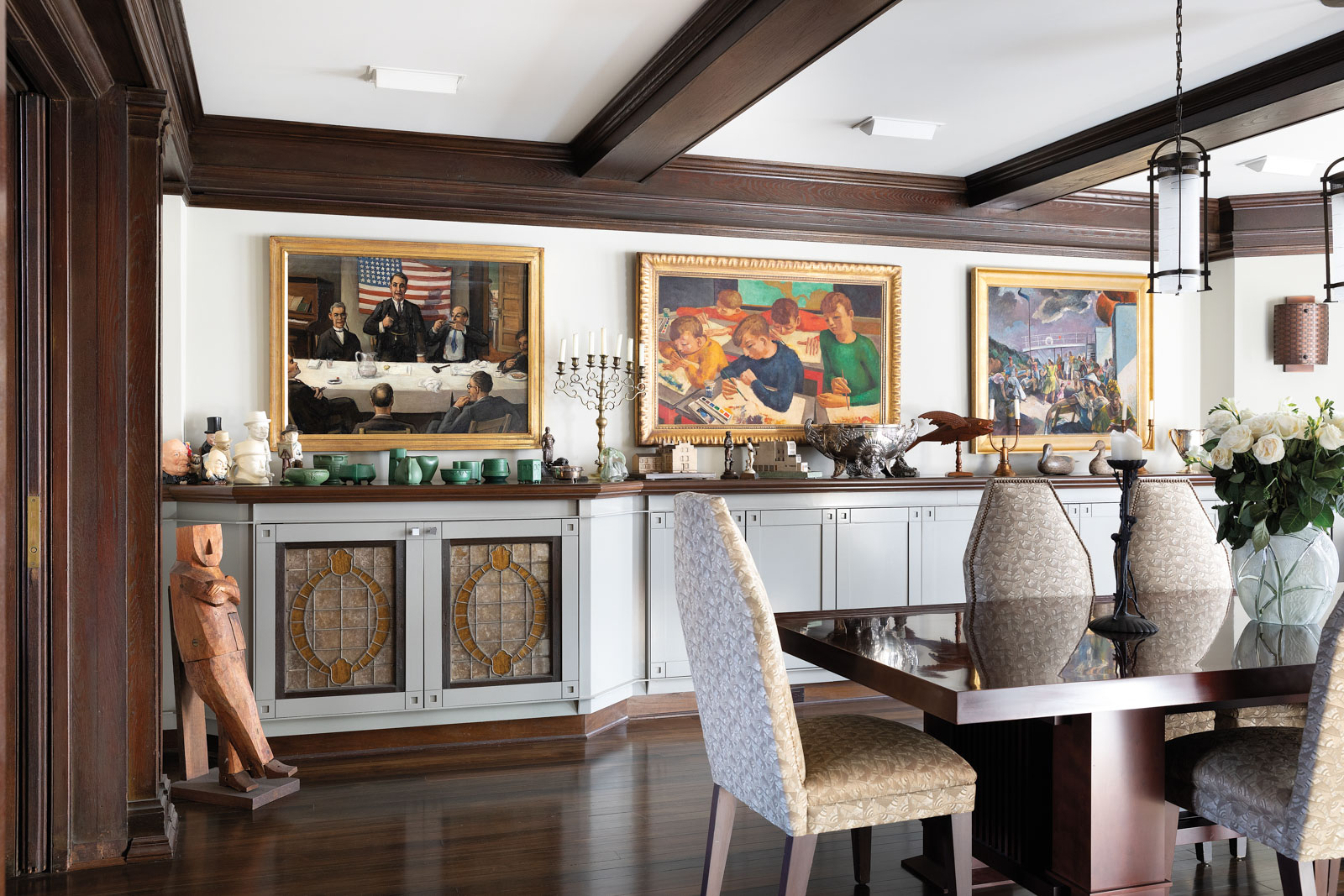 In the dining room are (left to right) Rotary Club Meets at Noon by Harry Louis Freund (1905-1999), Art Class by Kenneth Shopen (1902-1967) and Trip up the Hudson by Fred Buchholz (1901-1983).
Throughout the apartment are tchotchkes from their travels: a Tiffany silver pill box in the shape of a peanut, and frames from each country they have visited. “We’re not big shoppers,” she says. “We’re big collectors. On trips, it’s things that are easy to carry.”
In any large collection, there are bound to be interesting coincidences. One of their paintings has two. They discovered that the figure in a painting by Paul Trebilcock is his wife, Amaylia, on the beach in Capri. Their daughter, Adrienne, once lived in the collectors’ building as did the painter Leon Kroll with whom Amaylia, also a painter, had studied.
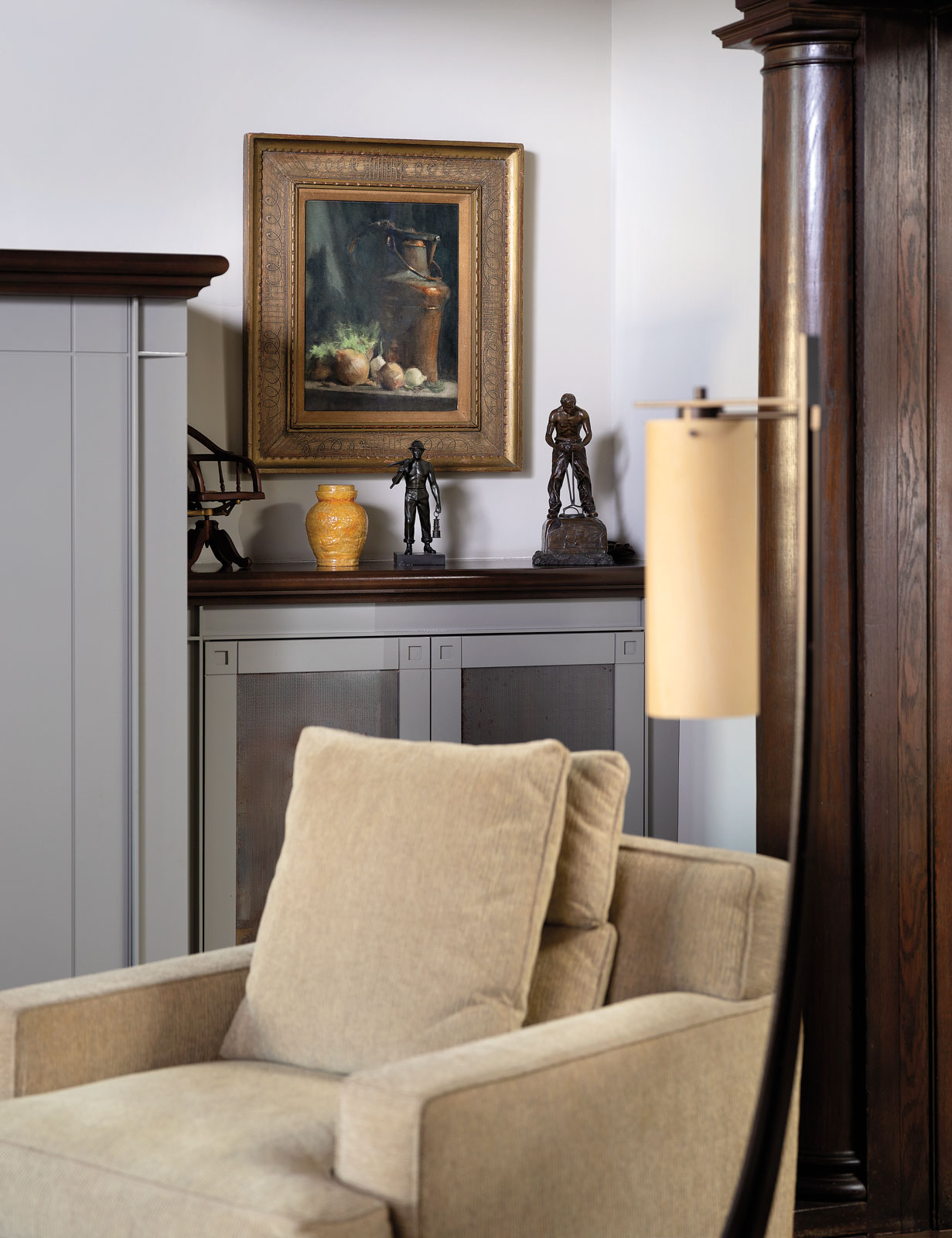 Complementing a collection of hammered copper is a watercolor by John Singer Sargent (1856-1925).
The couple enjoy talking about their collection with their guests, many of whom “want to know everything about everything.”
When asked about living with the collection, she replies, “We’re totally aware of it all the time. Everything makes an impact. They’re like our kids.”
Powered by Froala Editor